Experiments
Rewriting the Rules
When AI imagines the future, how much of the past does it carry with it?
Tools: Midjourney, Discord, Image-to-Image Generation
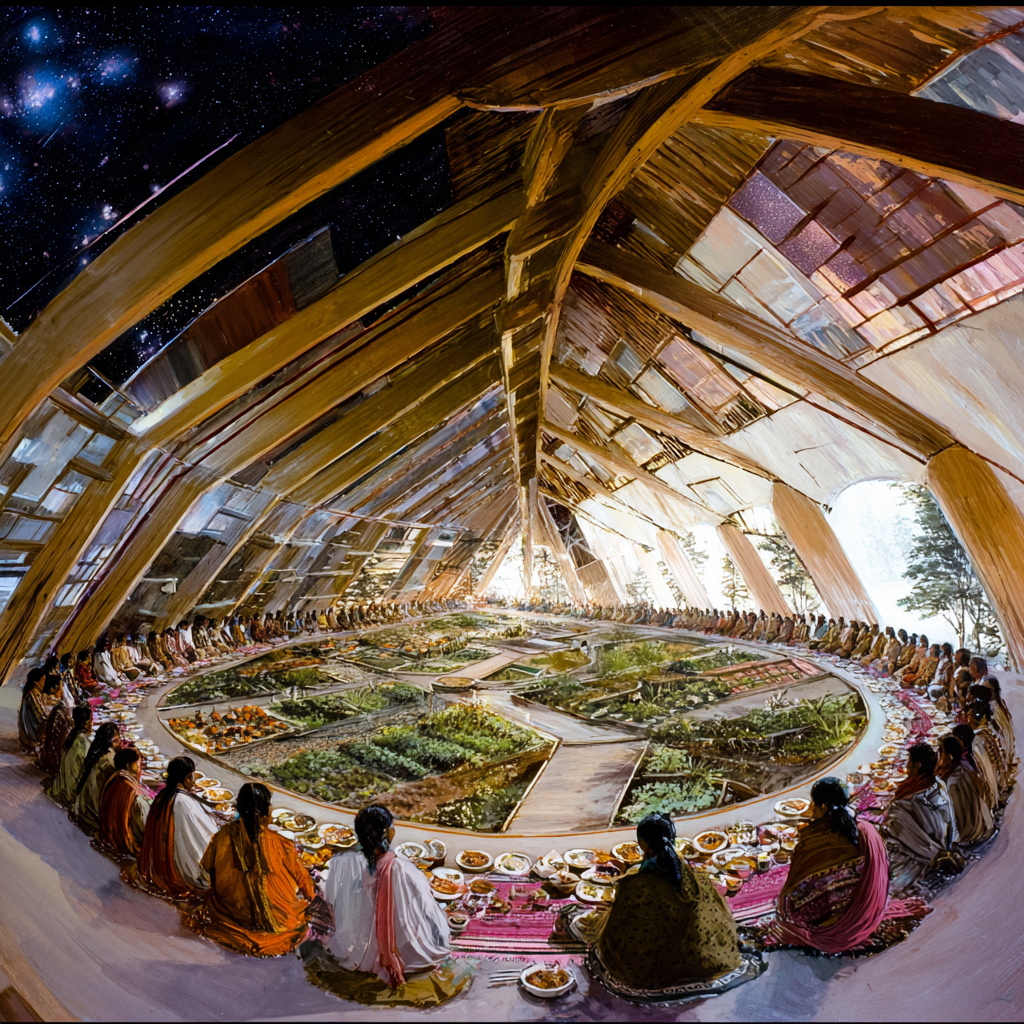
Overview
Rewriting the Rules exposes how generative AI carries cultural bias forward, even when asked to imagine something different.
Using Midjourney, I generated Haudenosaunee scenes through text prompts. Despite specifying non-Western contexts, the outputs consistently reflected Western assumptions about gender, care, and power.
I then introduced targeted visual interventions, using image-to-image generation to disrupt those patterns and shift how the scenes were rendered.
The shift made one thing clear: the system was not imagining freely. It was defaulting to what it already knew.
This project makes that visible. AI-generated imagery does not start from scratch. It inherits a point of view.
Insights
- •As AI systems scale, they don't just reflect dominant ways of seeing - they help stabilize and reproduce them at scale. What looks like "generation" is often repetition of learned patterns.
- •Even when prompted with non-Western contexts, Western patterns still shape the output.
- •Disruption is not just corrective; it expands the space of what the system is able to produce.
Outputs
Select examples from the experiment illustrating how targeted visual interventions can shift AI-generated imagery.
The model treats Indigenous culture as something historical, unable to imagine it as a living, evolving future.
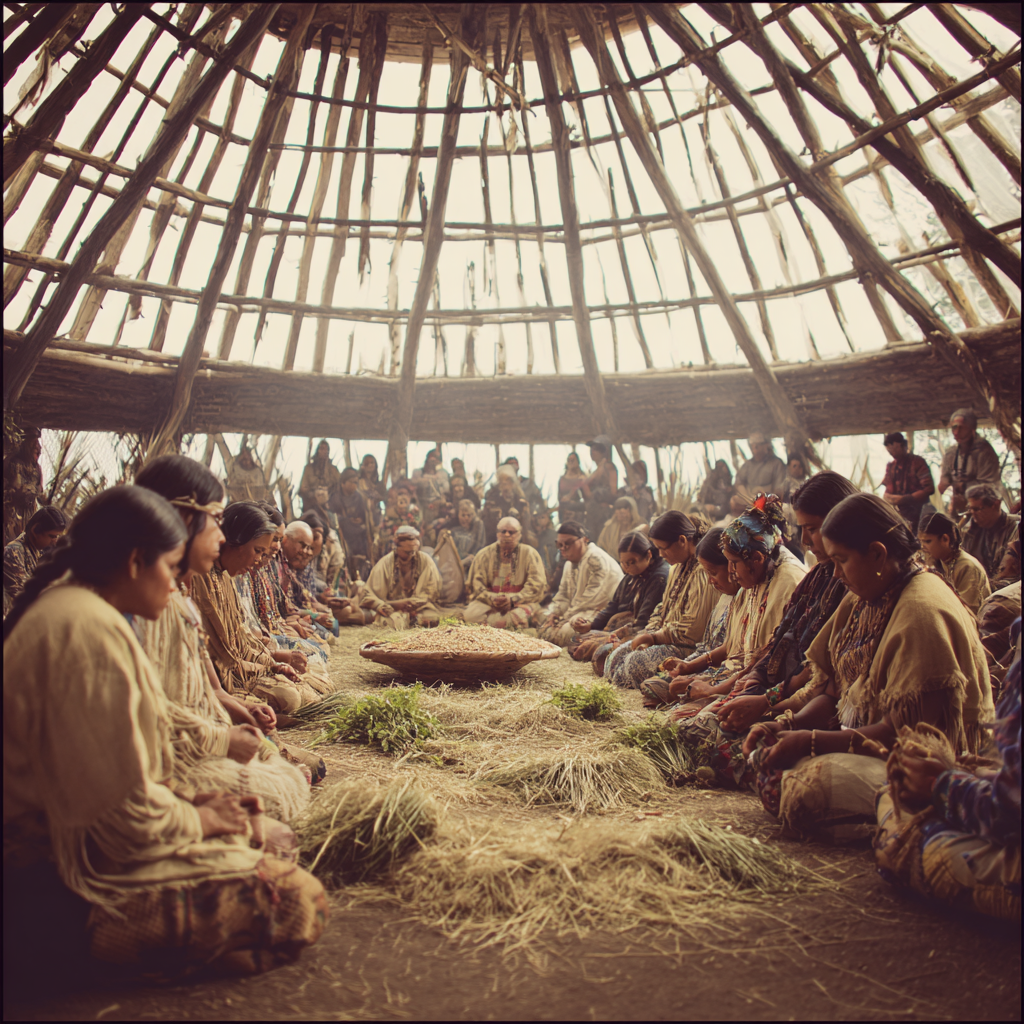
Before Intervention
The outputs defaulted to historical or traditional imagery, failing to incorporate any visible futurism - despite explicit prompting - resulting in scenes that reflect the past rather than imagining Indigenous governance, technology, and space in the future.
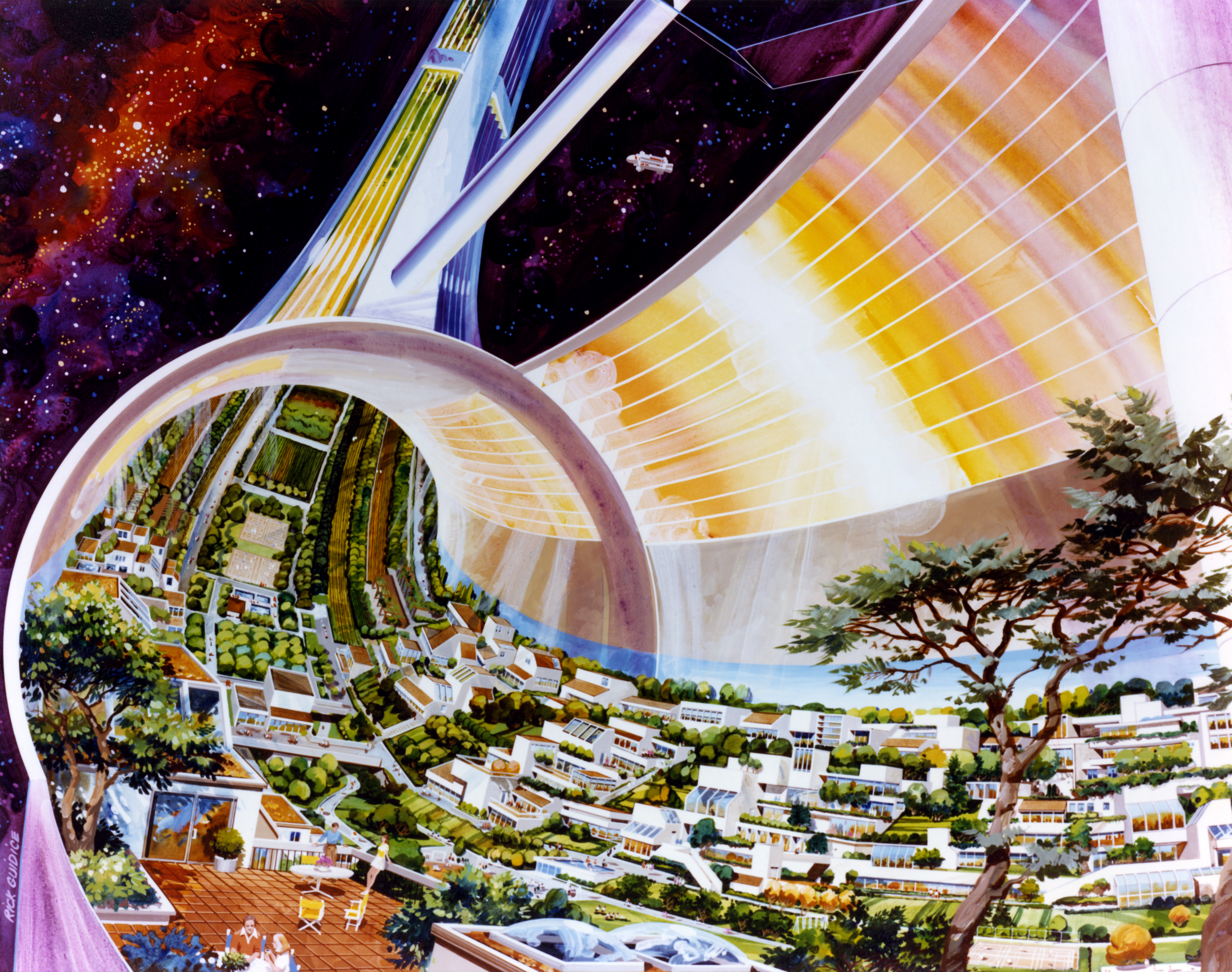
Intervention
I referenced an image from the Stanford Torus space settlement studies (NASA, 1975), where long interior corridors and branching communal spaces echo the spatial logic of the longhouse, a structure central to Haudenosaunee culture, reimagined in a futuristic context.
After Intervention
The intervention grounded the scenes in a coherent spatial logic, translating longhouse structures into a futuristic context with embedded technology and clearer social organization, shifting the outputs from generic sci-fi or historical imagery toward a more integrated and legible vision of Indigenous futurity.
Despite prompting a culture where women already hold primary leadership roles, the model recenters men and falls back on stereotypical historical imagery.
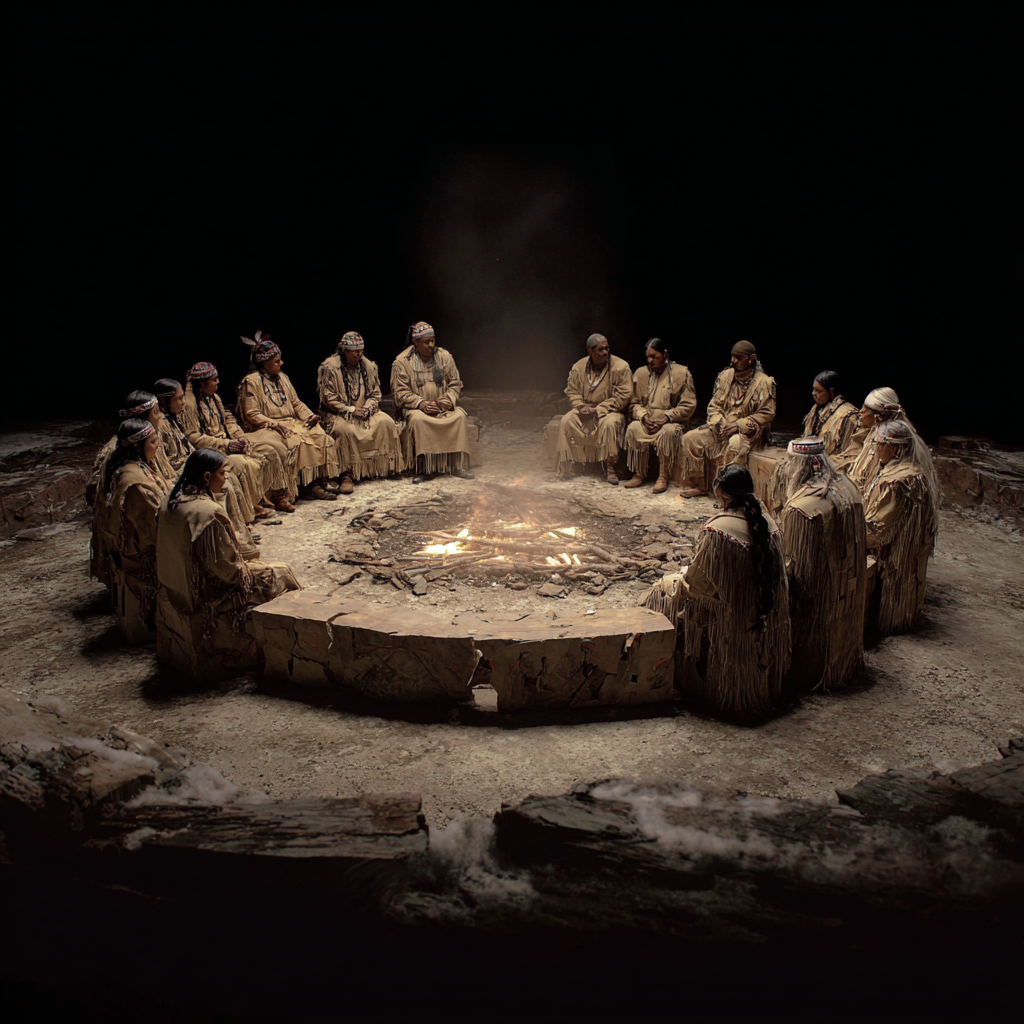
Before Intervention
The images defaulted to stereotypical and historically coded Native American imagery, failing to depict a specific Haudenosaunee context or any meaningful futurism, while also misrepresenting leadership by centering male figures and slipping into warrior aesthetics rather than governance.

Intervention
I referenced a picture of a real Clan Mother. A Clan Mother is a respected Haudenosaunee leader responsible for guiding her community, preserving lineage and traditions, and selecting or advising chiefs based on the well-being of the people.
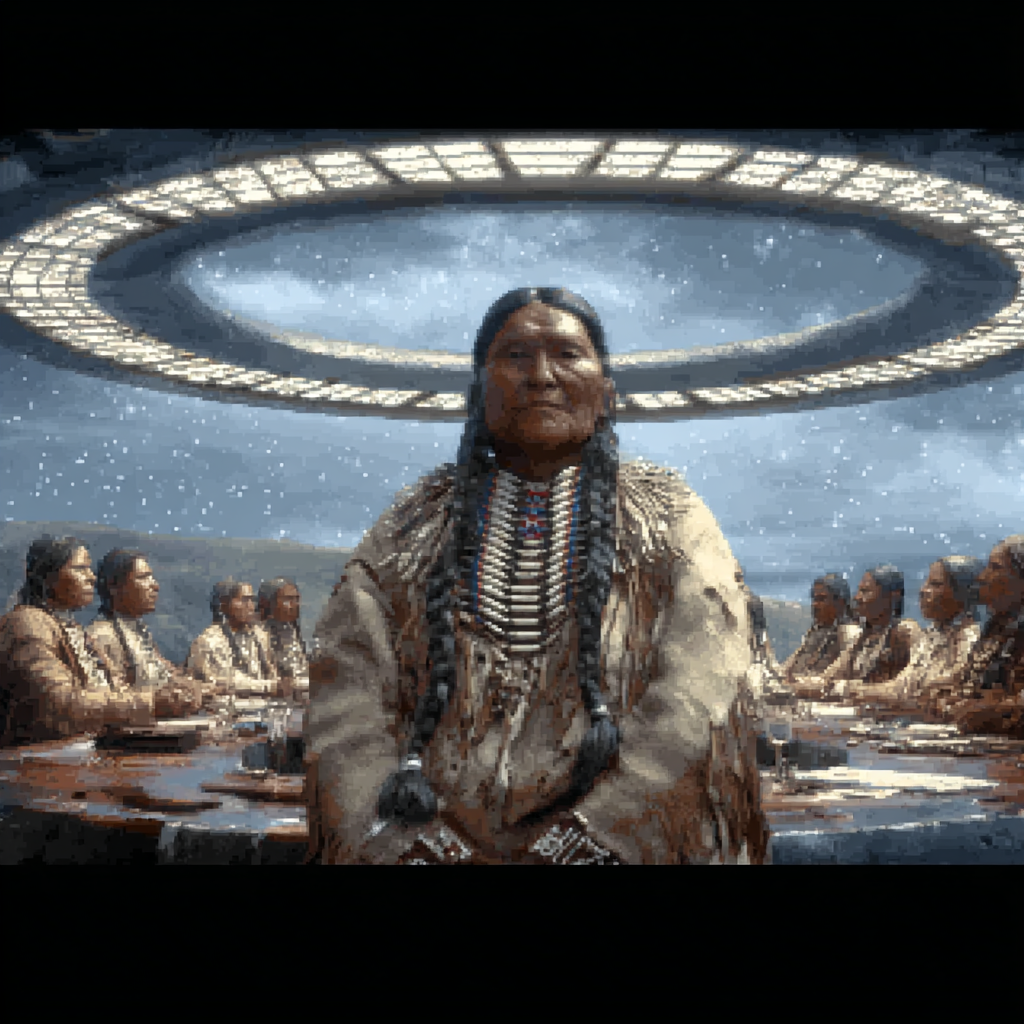
After Intervention
The intervention helped the model correctly center a Clan Mother as the authority figure, producing more accurate expressions of leadership, maintaining visible futurism, and avoiding defaulting to male leaders - while better reflecting gender dynamics within the scene.