Experiments
The Joy of Making
Is creativity defined by the tool, the process, or the feeling of being alive while making something?
Tools: Stretch Robot, Python, OpenCV, dlib, Webcam, DALL·E, Paint, Sponge
Overview
The Joy of Making is an interactive installation that challenges a common assumption: that better tools lead to better creative outcomes.
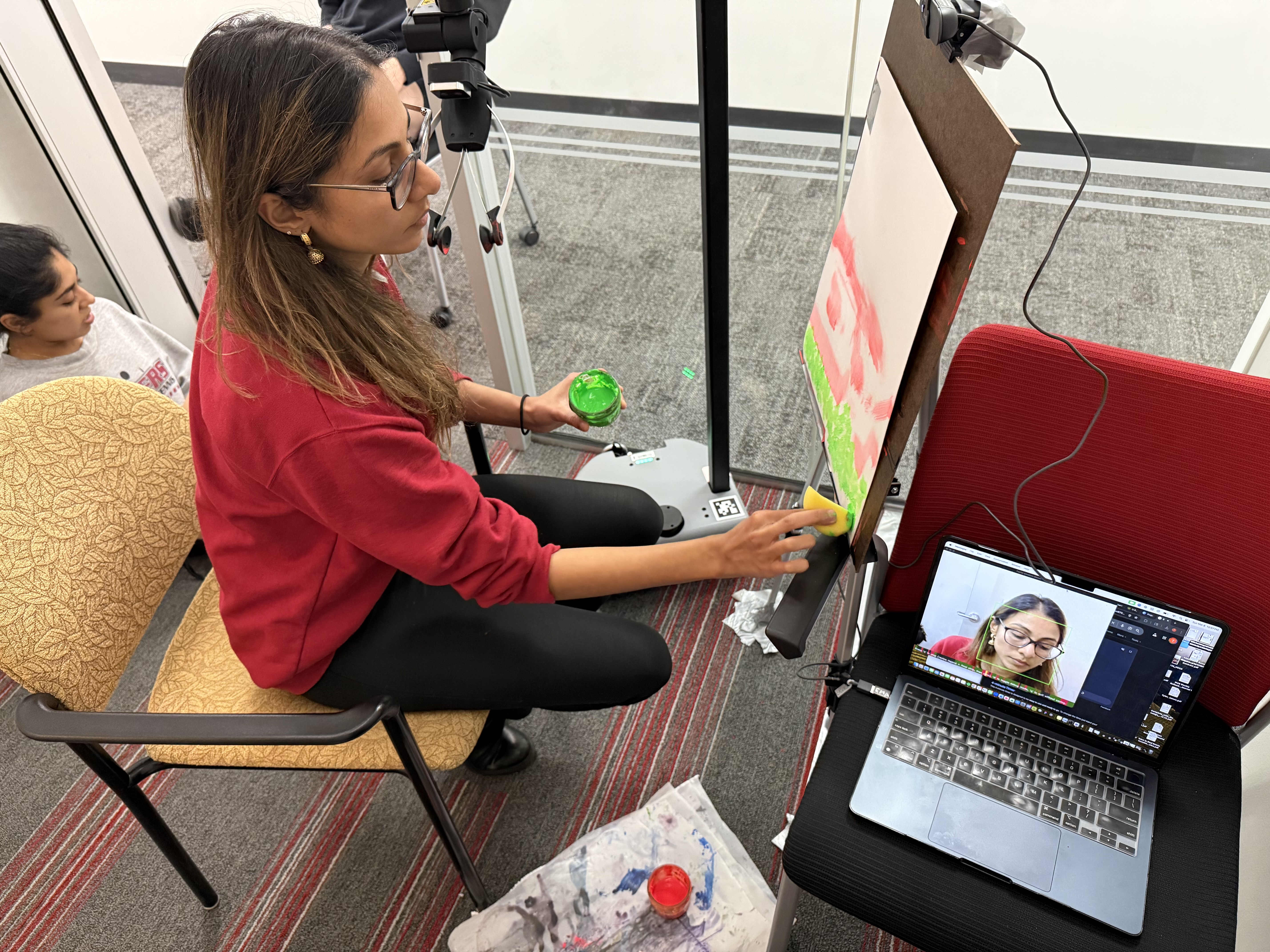
Participants begin a painting with a robot, then complete it by hand. As they move between the two, a facial recognition system captures subtle emotional shifts and translates them into a visual record of the experience.
The goal is not to evaluate the final artifact. It is to surface something we usually ignore: the emotional experience of making.
The project shows that technology does not just change what we create. It changes how it feels to create.
Insights
- •Technology does not replace creativity. It changes the experience of being creative.
- •There is no single "better" way to create. Different tools produce different emotional states, not just different outputs.
- •The value of creativity is not just in the artifact. It is in the experience of making it.
Participant Outputs
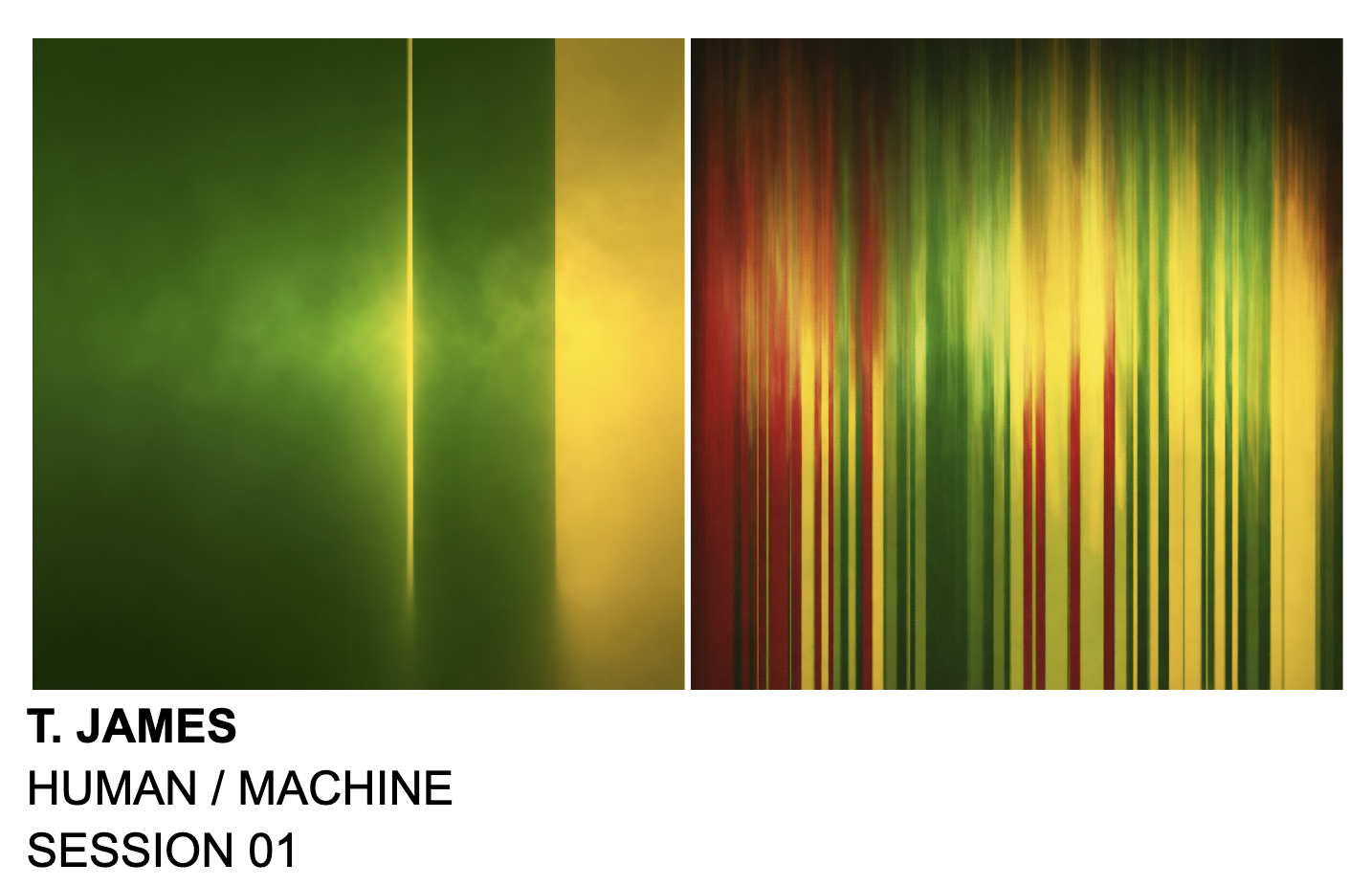
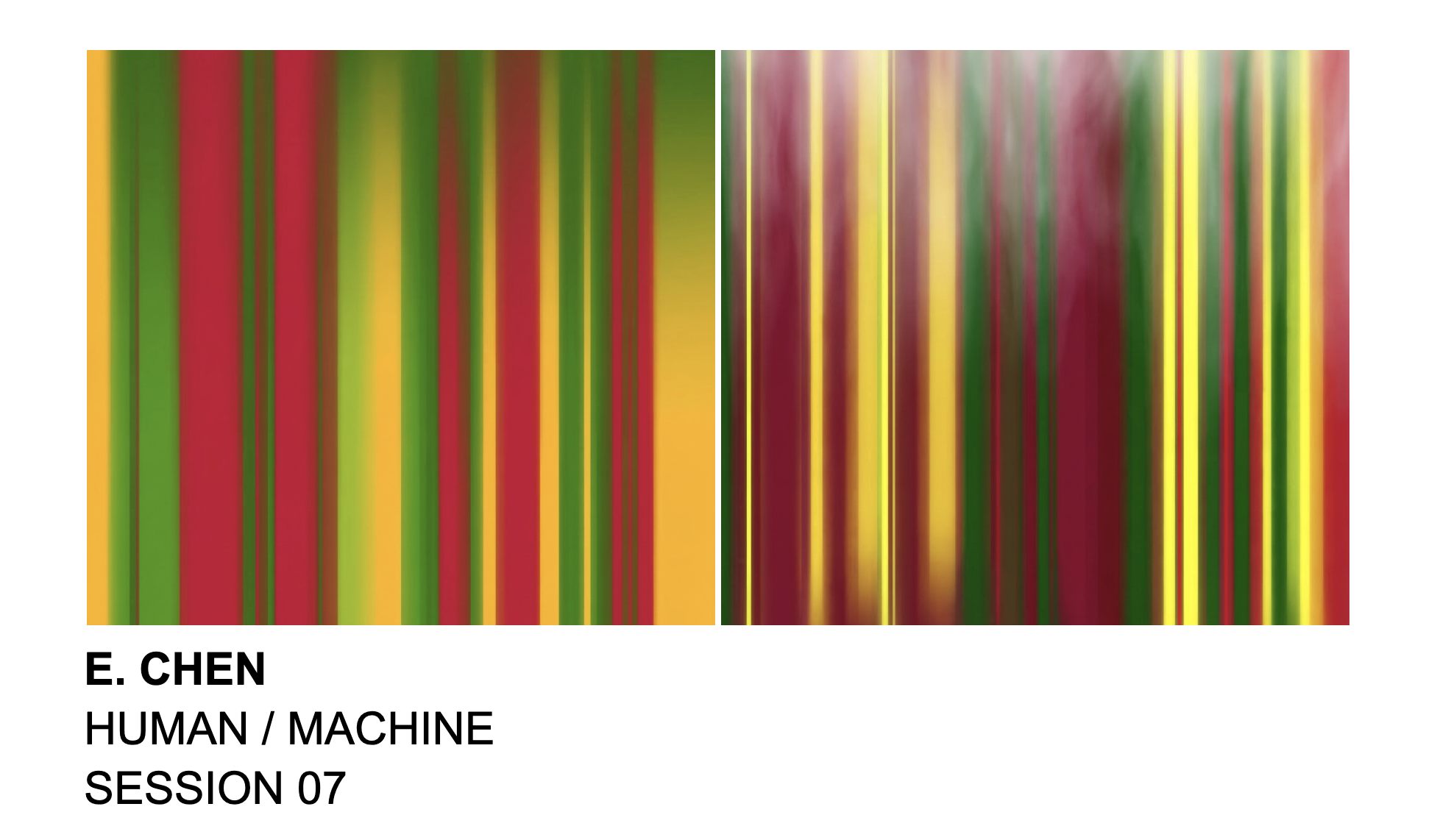
Each output is generated using DALL·E, based on emotional data captured through real-time facial tracking. The visual style is inspired by aura portrait photography, rendering emotional states as fields of color and light.
1 / 7
Audience Experience
A participant enters a space dressed as an artist's studio - a table covered in art supplies, art books for inspiration, and ambient lo-fi music playing in the background. The experience unfolds in four parts:
Part 1
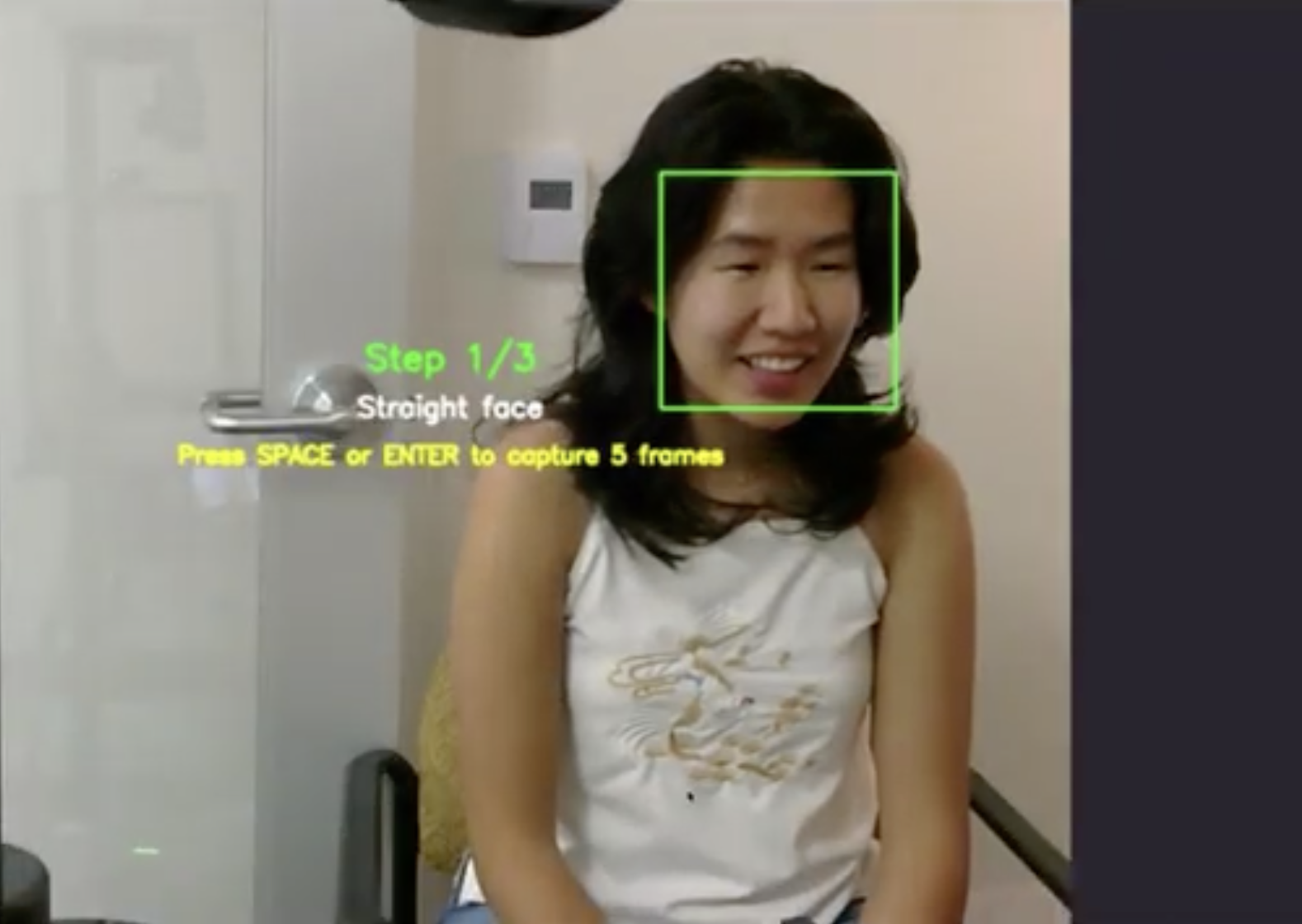
Consent & Calibration
The participant is informed that their facial expressions will be tracked during both sessions, that no facial images will be stored, and that only emotional state categories - neutral, happy, or angry - will be logged. They complete a brief calibration, making each expression while the system registers their baseline.
Part 2
Painting with Technology
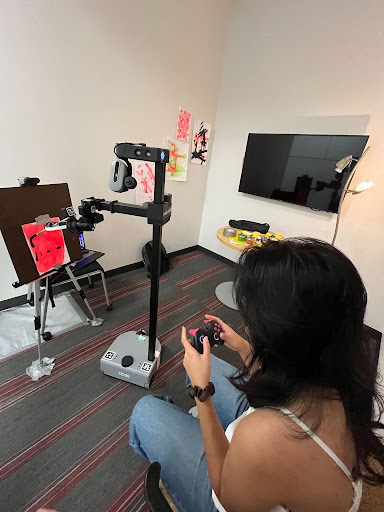
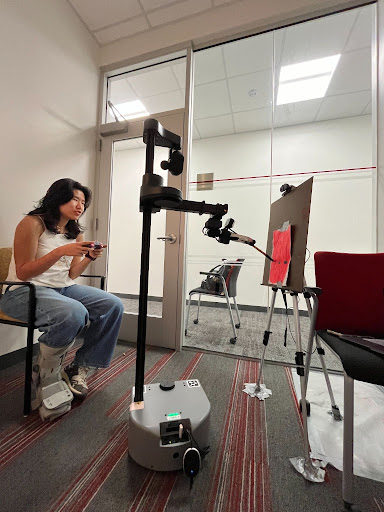
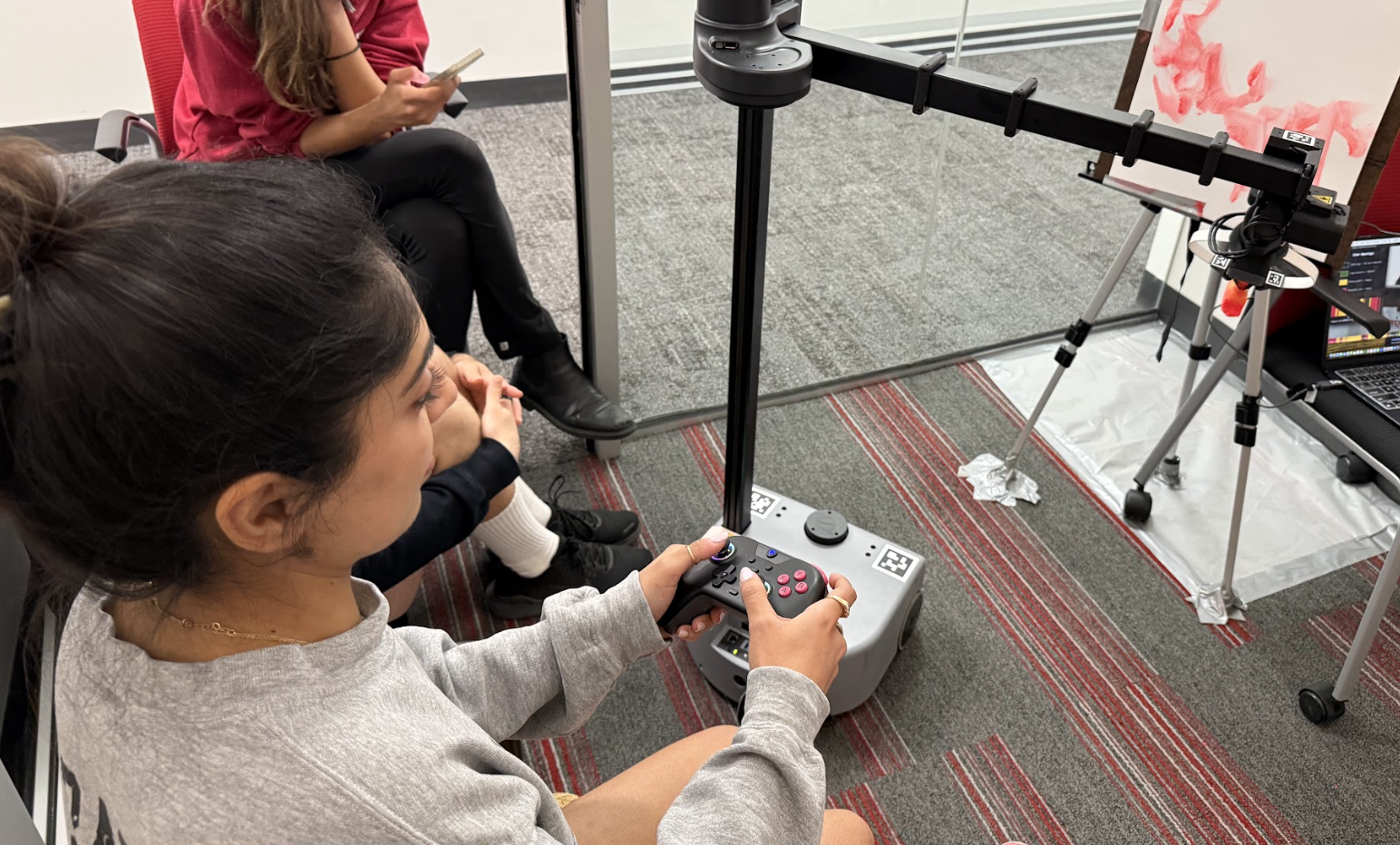
The participant has four minutes to paint using the Stretch robot, with the guidance that they can paint whatever emotion they feel in the moment. We give the participant a quick hands-on tutorial on how to use the Stretch controller. They guide the robot's arm with a controller, directing the sponge across a large sheet of paper mounted on an easel.
Part 3
Painting by Hand
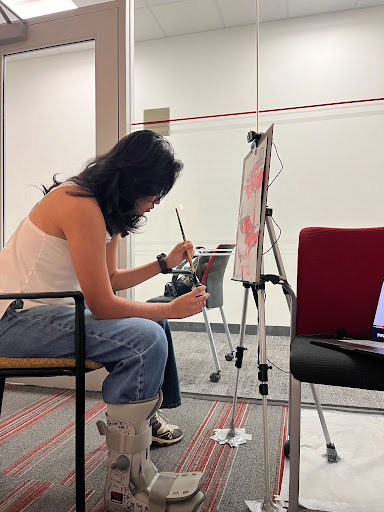
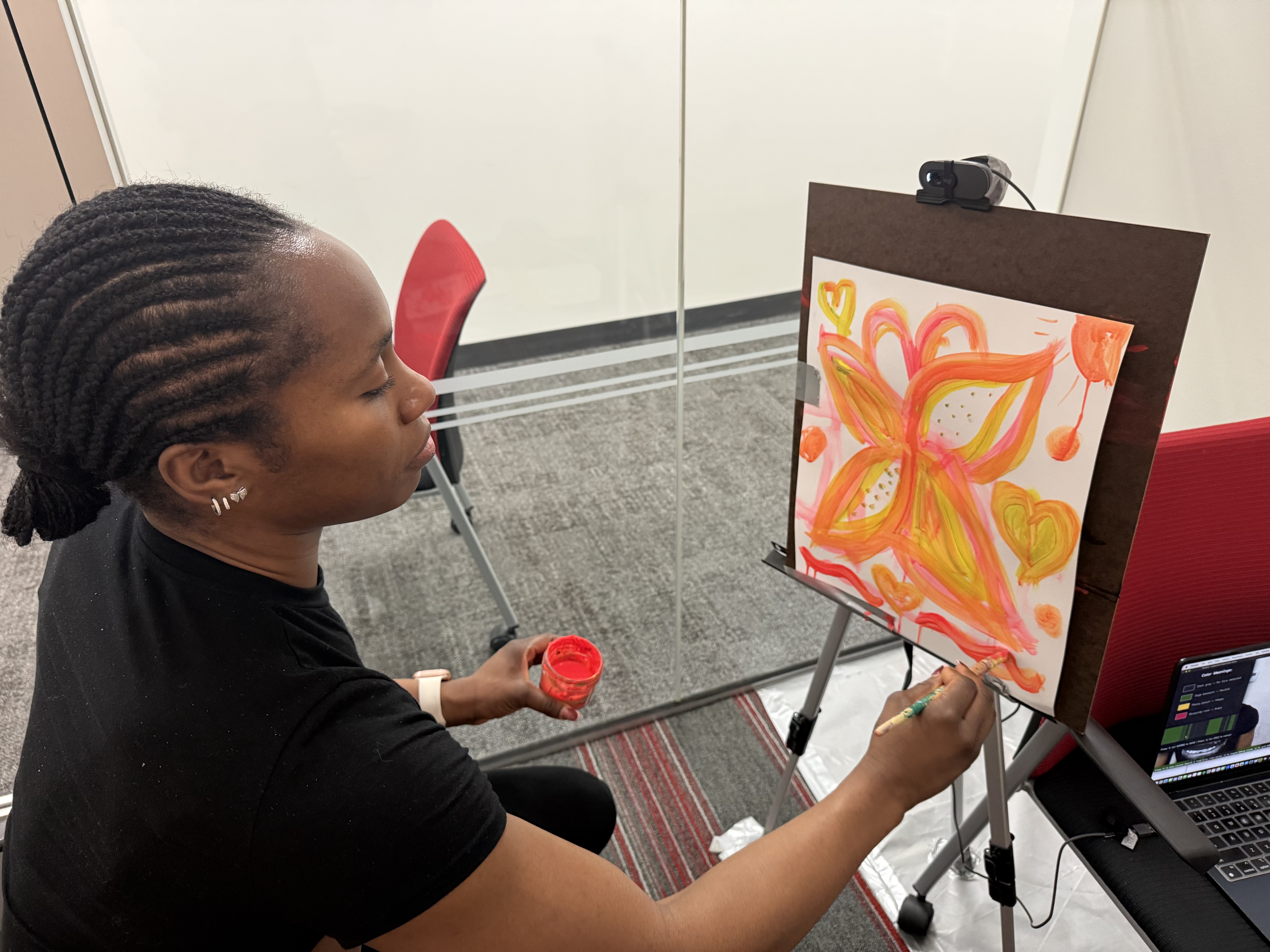
A new facial tracking session begins. The participant has four minutes to finish their painting, entirely by hand. No guidance, no controller, no robot. Just paint, sponge, and paper.
Part 4
Creation of Emotional Color Auras
The two emotional auras (human and machine) are developed, and we walk the participant through what we were tracking with their facial expressions - yellow for happy, red for angry, green for neutral. Participants can also see the outputs of other participants - not just their paintings, but their emotional auras, to see which sessions produced more agitation, more happiness, more flatness.
Live Installation
Consent & Calibration
Painting with Stretch Robot
Painting by Hand